 Call us:


AOS Furniture Supplies · Flexible seating
Stacking Chairs
Plastic, fabric and mesh stacking chairs for halls, schools and workplaces.
Stacking chairs make shared spaces more flexible. Also called stackable chairs, they fit on top of matching chairs for compact storage. Plastic stacking chairs offer straightforward cleaning for busy halls, canteens and activity rooms; fabric and mesh options suit meetings, training and visitor seating.
Explore our plastic, fabric and mesh stacking chairs, discover where they work best and find the right seating for your space.
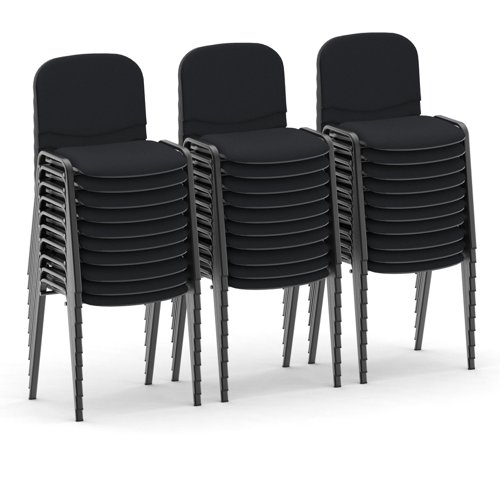
Shop stacking chairs by material
Start with how the room is used and how often the chairs need moving or cleaning. Browse the full material ranges below, or view a product example to check its specification.
Easy cleaning · Everyday flexibility
Plastic stacking chairs
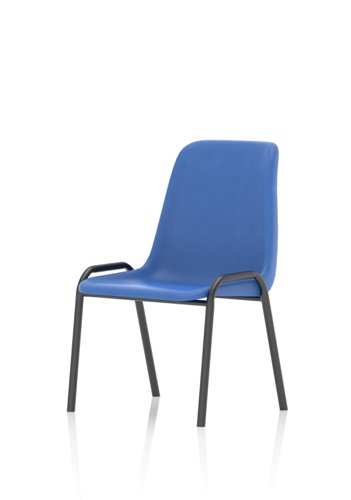
A practical starting point for canteens, activity rooms, school halls and community spaces. A moulded polypropylene shell has fewer fabric surfaces to maintain and is easy to wipe down using the recommended cleaning method.
Check the shape of the seat, the chair weight and whether outdoor use is specifically approved. A plastic seat alone does not make a chair weatherproof.
Example shown: View the Polly chair.
Padded seating · Meetings & events
Fabric stacking chairs
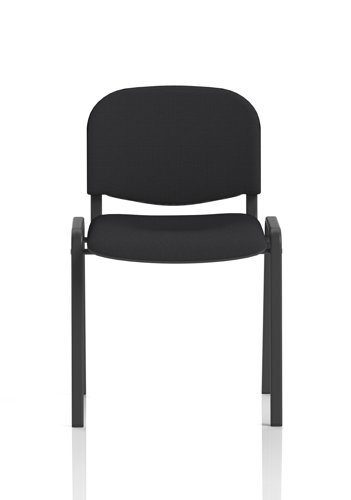
Consider upholstered stacking chairs for training sessions, conferences, village halls and visitor seating. Padding can make longer seated sessions more comfortable, while fabric colours help coordinate the room.
Compare seat depth, cushioning and recommended use. Fabric needs the correct upholstery care; it is less convenient than a wipe-clean shell where spills are frequent.
Example shown: View the ISO fabric chair.
Airflow · Contemporary meeting spaces
Mesh stacking chairs
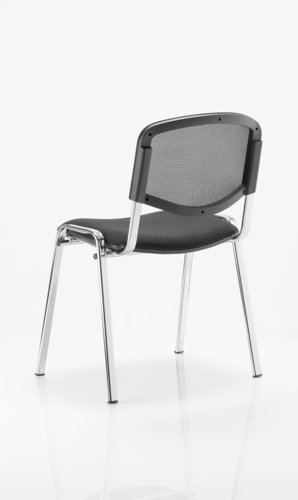
Mesh-backed stacking chairs combine an open backrest with an office-style appearance. They suit meeting rooms, training spaces and visitor areas where a breathable backrest and compact storage are useful.
Many mesh models still have a fabric-covered seat. Check both materials, the back support, the stacking limit and any armrest options before choosing.
Example shown: View the ISO mesh chair.
Why choose stacking chairs?
Recover usable floor space
Store chairs together when they are not needed, so a room can switch from a seated meeting to an activity session, exhibition or open event.
Change the layout more easily
Use the same chairs in rows, around tables or in small groups. A suitable trolley can make regular room changes more manageable.
Buy for a shared space
A coordinated chair range can serve several rooms. Check that the chosen model works for the longest sessions and the widest range of users.
Plan the whole seating cost
Compare purchase price with cleaning, handling, storage and accessory costs. A cheaper chair is not always the most practical choice if it takes longer to move or maintain.
Plastic, fabric or mesh: which stacking chairs should you choose?
| Material | Main advantages | Useful settings | Check before buying |
|---|---|---|---|
| Plastic / polypropylene | Simple wipe-clean surface; practical for frequent changeovers. | Canteens, school halls, community rooms and activity spaces. | Seat shape, handling weight, outdoor approval and stack limit. |
| Upholstered fabric | Padded seating; a wide choice of looks for formal or everyday rooms. | Training, conferences, churches, village halls and reception areas. | Cleaning needs, seat dimensions, usage guidance and fabric specification. |
| Mesh back with padded seat | Airflow through the backrest; a contemporary appearance. | Office meeting rooms, training rooms and visitor spaces. | Seat fabric, arm clearance, back support and stack limit. |
| Vinyl / polyurethane upholstery | A padded alternative with a surface that may be easier to wipe clean. | Shared waiting, meeting and multipurpose rooms. | Approved cleaning agents, seam design and the exact upholstery finish. |
Looking for another finish? Browse the full stacking chair category to compare additional colours, frames and upholstery options. The chair’s construction and fit matter as much as its material.
Where are stacking chairs used?
Village halls & community centres
Choose for the mix of activities: fabric for seated talks and meetings, or plastic where refreshments and craft activities make cleaning a priority. Check the available store, the stack footprint and who will move the chairs.
Schools, colleges & universities
Stacking chairs work well in assembly halls, staff areas, adult training and exam spaces when the model is suitable. For pupils, select the correct seat height and education specification for their size and activity; adult visitor chairs are not automatically suitable for younger children.
Training & conference rooms
Prioritise seat comfort, back support and table compatibility for the session length. Mesh or fabric chairs are useful options. If delegates need to write, allow suitable table space or check for a compatible writing-tablet accessory.
Churches & places of worship
Padded chairs can suit services, talks and community events. Consider whether linked rows, a mix of chairs with and without arms, or different seat widths are needed. Confirm linking accessories and layout requirements for the venue.
Canteens, staff rooms & cafés
Wipe-clean surfaces help with regular cleaning between users. Check the chair fits under the table, has suitable floor-contact glides and is approved for the environment in which it will be used.
Meeting rooms, reception & visitor areas
Fabric and mesh designs can give a professional appearance while allowing spare chairs to be stored. Consider access, varied user needs and whether arms would help particular users sit down or stand up.
Hospitality & events
Banqueting chairs for halls and functions
Banqueting chairs are a style of event seating; many are stackable. Upholstered seats and backs make them worth considering for conferences, dining functions and occasions where presentation matters.
The Arista blue banqueting chair KF03337 is an example in our range. Check the exact model’s storage limit, dimensions and care guidance before ordering for your venue.

One space, several seating layouts
Plan the room in use as well as the room in storage. These simple layouts show how stackable chairs can support different activities.
Theatre-style rows
Useful for talks, assemblies and presentations. Plan access, sight lines and any required linking between chairs.
Classroom-style tables
Useful for training and note-taking. Allow room for legs, bags, chair movement and access behind seated users.
Small groups & workshops
Useful for discussion and collaboration. Leave circulation space between groups and keep access routes clear.
Illustrative layouts only: not to scale and not a capacity or fire-safety plan. Confirm your room’s permitted layout, accessible routes and exits with the person responsible for the premises.
Stacking chair sizes, comfort and features
There is no single standard size for every stacking chair. Compare overall width and depth for the room layout, then seat height, width and depth for the people using it. A chair can fit the room but still be the wrong fit for the user or table.
What to measure
- Overall width: include the frame and arms, not just the seat pad.
- Overall depth: allow for the frame and backrest, then add room to sit down and move.
- Seat height: check the user can sit comfortably with supported feet and suitable leg clearance under the table.
- Seat width and depth: compare the usable seating area, especially for longer sessions or a varied user group.
- Stacked dimensions: ask for the height and floor space of the actual stack, which are not the same as the single-chair dimensions.
Comfort for the session
For longer meetings, look beyond padding alone. Seat shape, back support, space to change position and the chair’s recommended usage all matter. Where possible, assess a sample before committing to a large order.
A fixed stacking chair is generally intended for shared or occasional seating. For regular desk-based work, choose a chair suited to that task and the individual user.
Arms, linking and writing tablets
Arms may support some users, but increase overall width and can affect stacking or table clearance. Linking kits help compatible chairs form rows; writing tablets provide a small work surface on selected models.
Accessories are model-specific. Check whether they are included, ordered separately, or need removing before the chairs can stack.
Product examples: compare the specification
| Product | Seat height | Seat width × depth | Listed stack limit | Listed user weight limit |
|---|---|---|---|---|
| Polly blue polypropylene BR000203 | 435mm | 430 × 370mm | Up to 12 | 110kg |
| ISO black fabric BR000055 | 450mm | 470 × 420mm | Up to 12 | 110kg |
| ISO mesh / chrome BR000073 | 450mm | 470 × 420mm | Up to 12 | 110kg |
A user weight limit is not a stacking or trolley load limit. Different versions, arms and accessories may change the specification. These examples are not a universal size or weight recommendation.
How many chairs can you stack, and how much storage do you need?
Use the maximum stack height stated for the exact chair model. There is no safe universal number for all stacking chairs. For example, the Polly and ISO models above are listed as stacking up to 12, while the Jemini polypropylene chair KF74957 is listed as stacking up to 20. The limit for moving a stack may be lower than the limit for stationary storage.
Plan the storage space
- Measure the store, doorway and route to the room.
- Allow for the actual stack footprint: chairs may move backwards as the stack grows.
- Leave enough clearance to lift chairs off without hitting shelving or ceilings.
- Include trolley parking space and room to manoeuvre.
- Keep stacks on a firm, level surface and access routes clear.
A simple planning example
If you need 60 chairs and your selected model permits stationary stacks of 12, you need at least 5 stacks.
This only gives the number of stacks. You still need each stack’s dimensions, suitable handling limits and access space. Do not estimate storage height by multiplying the chair’s overall height by 12.
Planning example only; follow the instructions for the chair and trolley you buy.
Set up · Clear away · Store
Chair trolleys for regular room changes
A compatible trolley can reduce repeated carrying and help move chairs between the store and the room. Match the trolley to the chair shape, loading method and rated capacity; not every chair trolley fits every stack.
The Dynamic stacking chair trolley AC000096 lists compatibility with ISO, Polly and Nest Edge chairs, plus specified seat-first loading for Banqueting and Nest Loop chairs. Check the loading instructions for your chosen combination.
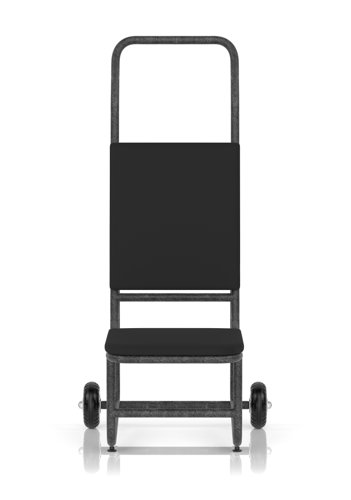
Moving chairs safely: a chair’s stacking limit is not an instruction to lift that many chairs together. Assess the task, load, route and people involved, and use suitable handling equipment. Follow manufacturer instructions and your workplace handling arrangements. See HSE guidance on manual handling for general workplace advice.
Stacking, folding and nesting chairs: what is the difference?
Stacking chairs
Matching chairs sit on top of one another. Useful when you want a fixed chair shape that can be stored vertically between uses. Check stack height and the available store.
Folding chairs
The seat and frame fold into a flatter profile. These can suit occasional seating and dedicated storage racks. Check hinges, stability, comfort and the correct trolley.
Nesting chairs
Usually have a flip-up seat and nest horizontally into a row, often on castors. Useful for frequent training-room changes where floor space for a nested row is available.
Some designs combine more than one storage method. A chair that folds or has castors is not automatically stackable.
Cleaning, durability and everyday care
Choose a finish you can maintain
Follow the manufacturer’s cleaning instructions for the shell, frame and upholstery. Remove spills promptly, use approved products and let surfaces dry before stacking. Do not assume a disinfectant or solvent is suitable for every plastic, fabric or mesh.
For fabric, check the recommended vacuuming and spot-cleaning method. For mesh, avoid sharp tools or treatments that could damage the weave.
Protect the chair and the floor
Check fixings, frame joints, glides and upholstery regularly. Replace worn floor-contact parts with compatible replacements where available, and remove damaged chairs from use pending assessment.
Stack matching models correctly so frames and stacking points carry the load as intended. Do not force different chair designs into the same stack.
For commercial or education projects, request the relevant test documentation for the exact model and upholstery. Fire performance, strength testing, recycled content and recyclability are product-specific; do not assume they apply to every chair in a range.
Buying stacking chairs in bulk for your organisation
Buying for a hall, school or workplace involves more than the unit price. A clear brief helps you compare suitable options and avoid ordering chairs that do not fit your tables, storage or delivery arrangements.
01
Confirm the seating brief
Tell us the room use, number of chairs, session length, colours and any access or user requirements. Include your tables and available storage dimensions.
02
Compare the full cost
Check the price per chair, pack quantity or minimum order, any multibuy pricing shown, delivery, accessories and services. A pack image does not always mean a pack price.
03
Plan delivery & placement
Confirm your postcode, required date, delivery access, stairs or lift, and where the chairs need to go. Check stock, assembly requirements and lead times for the chosen finish.
Help with furniture selection, planning and installation
AOS can support product selection and wider furniture projects, including layout planning, delivery and professional installation. Ask about delivery-only or an installation and placement service for your chosen products and location, and sample availability before a larger order.
Explore our office furniture and workplace solutions or contact our furniture team with your requirements. Bespoke finishes and made-to-order items may have different lead times and return terms.
Stacking chair questions answered
What are the best stacking chairs for a village hall?
Choose for the activities and storage available. Plastic chairs are practical where frequent cleaning matters; padded fabric can suit longer meetings, services and talks. Compare comfort, stack limits, trolley compatibility and the work involved in changing layouts before choosing. Browse all stacking chairs.
Are plastic stacking chairs better than fabric chairs?
Neither is best for every room. Plastic usually offers simpler surface cleaning, while fabric provides upholstered seating for meetings and events. Compare the particular seat shape and usage guidance rather than choosing on material alone.
Are mesh stacking chairs comfortable for training?
A mesh back allows airflow, and many models have a padded seat. Comfort still depends on fit, back support and session length. Check the chair’s dimensions and recommended use, and consider a sample for a larger training-room order. View mesh stacking chairs.
How high can stacking chairs be stacked?
Only as high as the manufacturer permits for the exact model and configuration. Arms, accessories and trolley use can change the limit. The specification table above gives named examples, but a 12-chair or 20-chair limit must not be applied to other designs.
Can plastic stacking chairs be used outdoors?
Only where the product is explicitly suitable for outdoor use. Check the frame, finish and care requirements as well as the plastic shell. Outdoor suitability does not necessarily mean the chair can be left outside permanently.
Are stacking chairs suitable for schools?
They can suit halls, assembly, staff and training areas when the chosen model meets the intended use. Children’s classroom seating must be selected for the pupil’s size and table height. Do not assume an adult conference chair is suitable for every age group.
Can stacking chairs be linked together?
Some models accept compatible linking devices; others do not. Check the exact chair, frame and connector, whether the kit is supplied separately, and your venue’s seating-layout requirements. Never assume all chairs in a range share the same linking system.
Can you stack chairs with arms?
Some chairs with arms are designed to stack, but the permitted height and footprint can differ from an armless version. Check the specific configuration and whether any accessories must be removed first.
How many stacking chairs will fit in my hall?
There is no reliable universal chairs-per-square-metre figure. Capacity depends on chair width, tables, aisles, wheelchair spaces, exits and the permitted layout. Measure the room and use an agreed seating plan rather than multiplying the floor area by a rule of thumb.
Are stacking chairs supplied individually or in packs?
Both individual and bundle listings may be available. Check the product title, pack size, minimum order and whether the displayed price is per chair or per pack. Compare the total cost for your required quantity, including the delivery option.
Do I need a chair trolley?
A compatible trolley is worth considering when chairs are moved regularly or stored away from the room. Match its capacity and loading method to the chair model and route. It does not remove the need to assess safe handling.
Can AOS help with a larger seating order?
Yes. Contact AOS with the quantity, intended use, colours, postcode, access details and required date. We can help compare products and discuss furniture planning, delivery and installation options for your project.
Choose the right seating for your space
Ready to find your stacking chairs?
Shop the range by material, or speak to AOS about furnishing a hall, training room, school or workplace. Have your quantity, room use and storage measurements ready and we can help you compare the options.
Product examples and dimensions are drawn from the linked AOS listings. Check the current specification and manufacturer instructions for your selected variant before ordering. Images show example products and finishes.


